O-Log 2 was released with the Find X9 Ultra, though no upgrades were mentioned at the launch event.
If you’re interested, you can first read the analysis of its predecessor, O-Log.
OPPO O-Log 2
OPPO has not yet released a white paper or specification, but the LUTs and CTL/DCTL files for ACES conversion are already available for download. Through the CTL, we can work out the exact form of O-Log 2.
The colour space remains ITU-R BT.2020.
Encoding curve:
where is the linear reflectance, ranging from 0 to 1200%, and is the encoded code value, ranging from 0 to 1.
The corresponding decoding curve:
In form, it is similar to the previous O-Log, but the natural logarithm has been replaced with a base-2 logarithm, and the parameters have also been adjusted. The input luminance range has changed from 0–16 to 0–12, matching Apple Log and close to Mi-Log’s 0–11.52.
The code value for 100% reflectance input is 0.6942, which is very close to Apple Log (0.6946). In fact, this encoding and decoding curve is almost identical to the part of the Apple Log curve where R >= 0.01; great minds think alike, perhaps.
Apple Log Encoding Function:
LUT
The official website provides three LUTs, converting from O-Log 2 to Rec.709, and to Rec.2020 PQ or HLG, all with 65-point precision and generated by Davinci Resolve.
At the moment, O-Log 2 seems to be exclusive to the X9 Ultra. I first encode a linear image into O-Log 2, then apply one of the three official LUTs.
O-Log2-to-Rec709_Gamma24-D65_65.cube
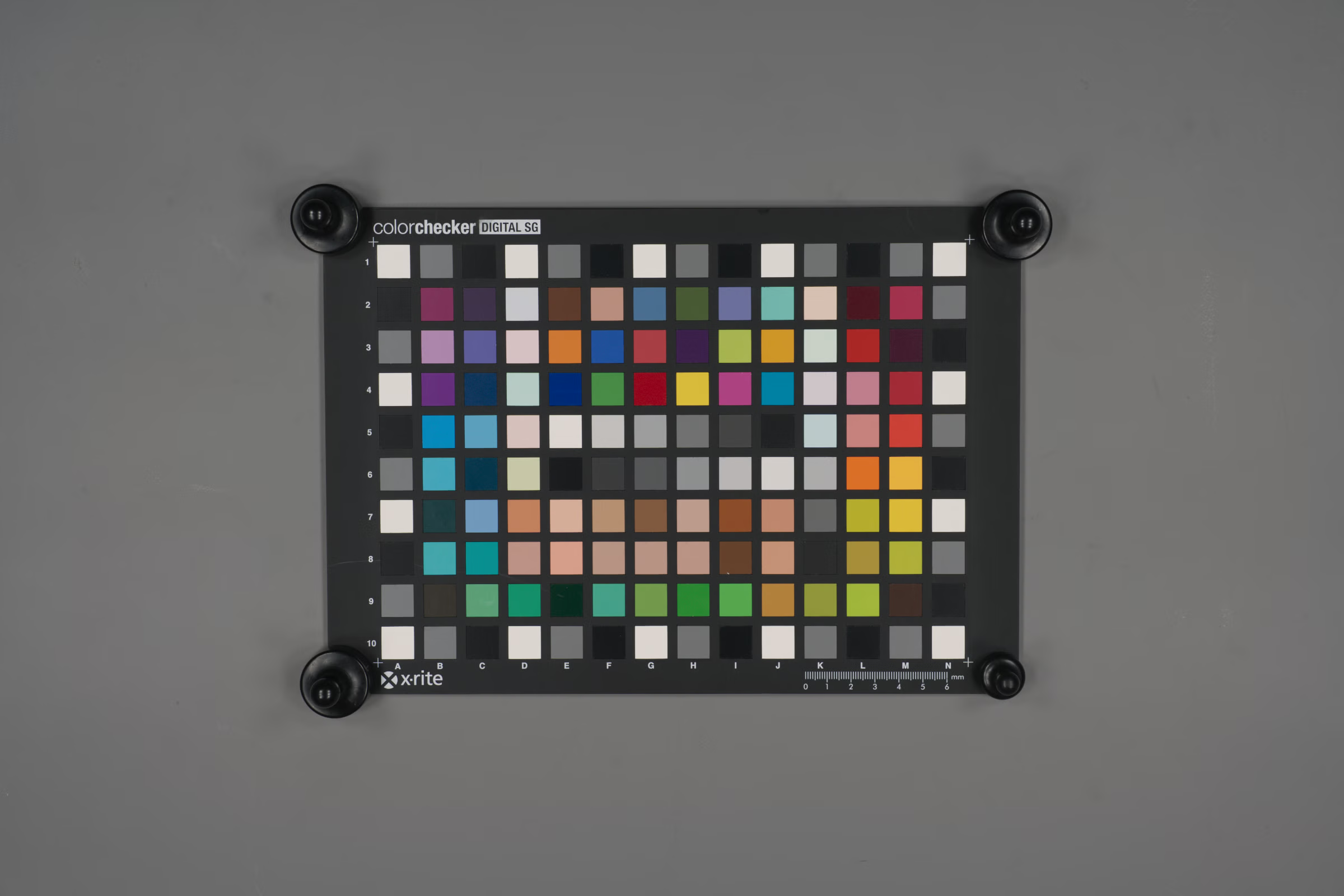
O-Log2-to-Rec2020_PQ1000_65.cube
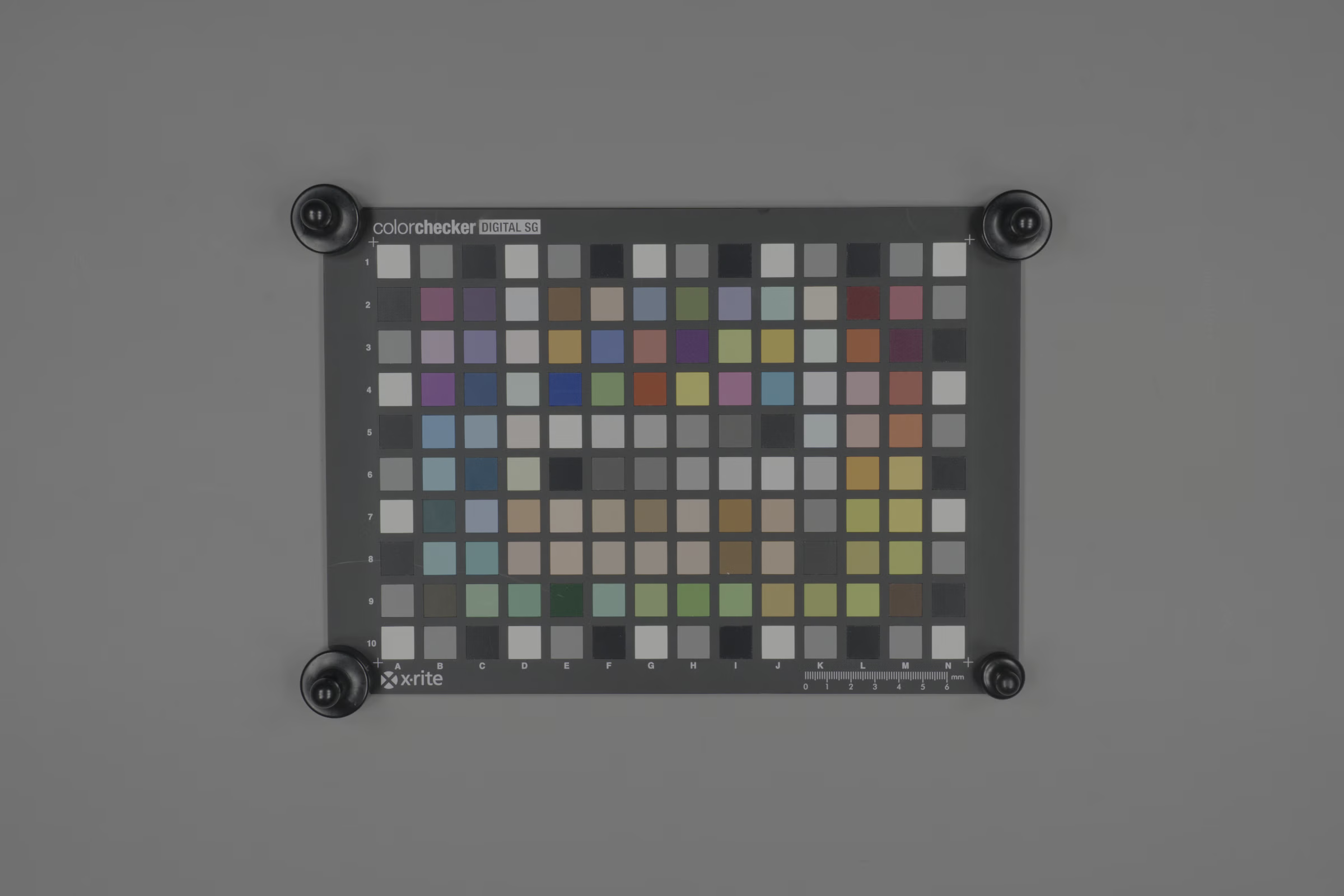
O-Log2-to-Rec2020_HLG-D65_65.cube
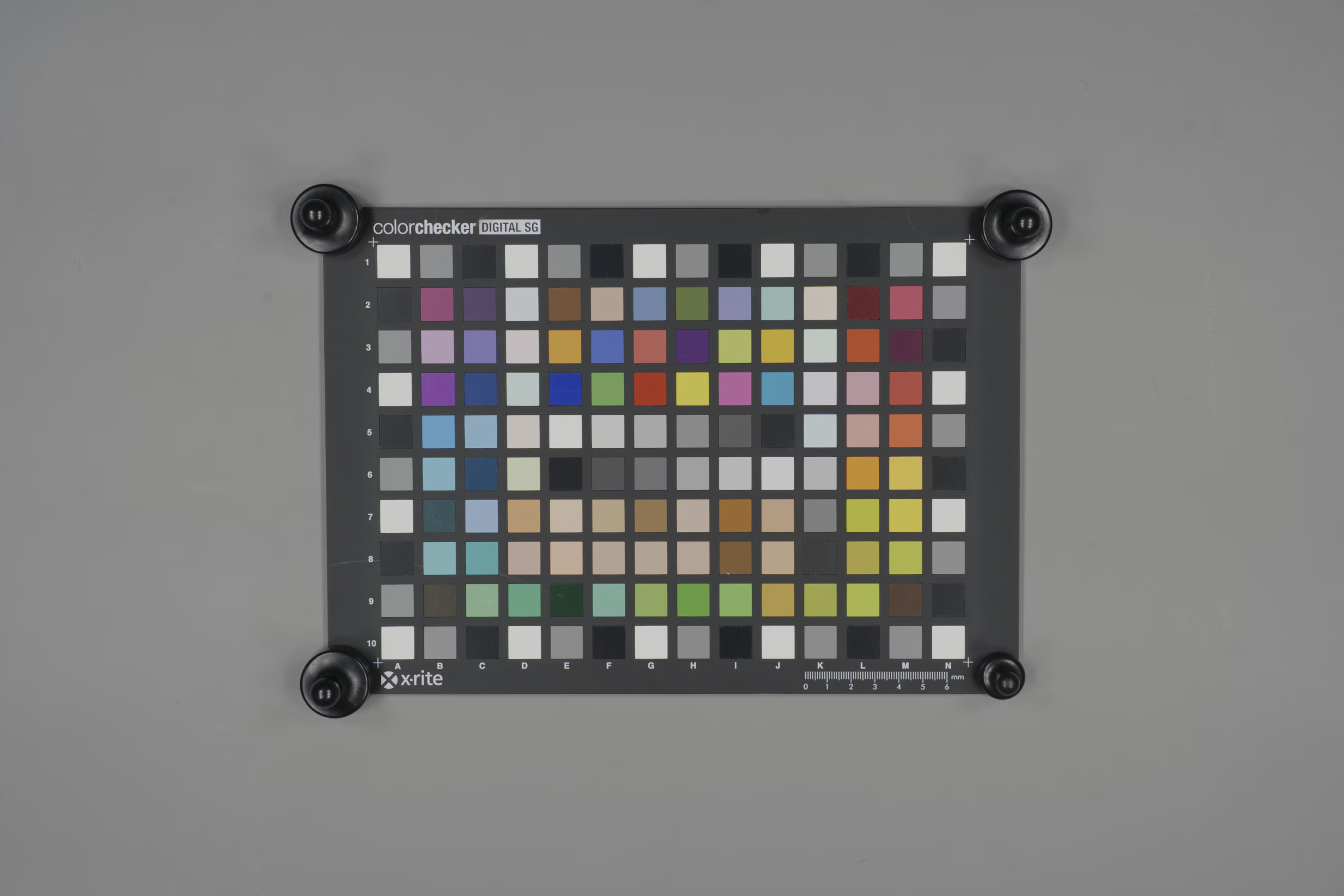
The contrast in the PQ version is a bit higher than the HLG one. This might be because, for video, HLG-encoded footage still goes through an OOTF during playback, applying an extra gamma, whereas a static image skips this step.
Additionally, the PQ LUT’s maximum output code value is 0.7339, roughly 850 nits. The output code value for scene diffuse white is 0.634, which corresponds to around 335 nits, a bit brighter than the common 203 nits.
ACES
O-Log 2 is said to support ACES professional colour management. Actually, O-Log already supports it; as long as you can transform into AP0 with the correct transform, it counts as supported.
The chromatic adaptation transform used to convert from D65 white point to D60 white point is rather close to CAT02, with D=1.